


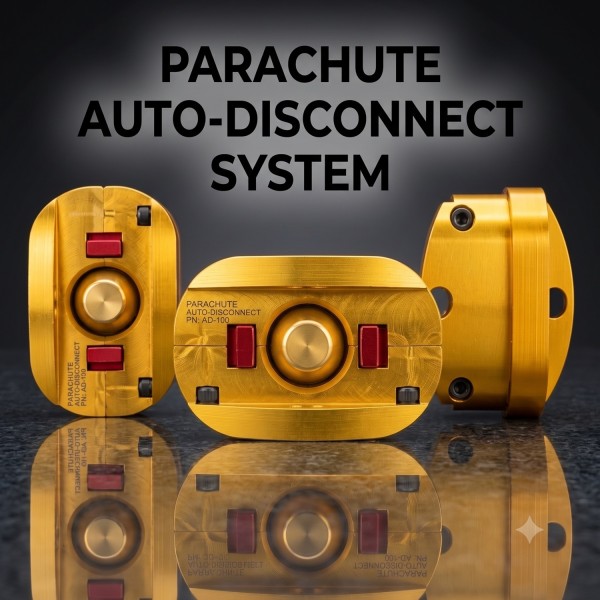
Automatic Parachute Release Device (Impact Shackle)

The Automatic Parachute Release Device (Impact Shackle) is a critical safety component of a drone emergency parachute system, developed to prevent secondary damage in the event of a crash caused by in-flight anomalies or system failures.
When a drone experiences a malfunction, the emergency parachute deploys to reduce the descent speed of the aircraft and guide it safely to the ground. In this process, the automatic release device serves as the connection between the drone and the parachute. In particular, although significant impact occurs at the moment the parachute deploys in midair, the device is designed so that this impact alone does not trigger separation. As a result, the parachute can stably support the aircraft and ensure a controlled and safe deceleration.
However, once the drone lands on the ground, the device detects the landing impact and automatically releases the connection. This prevents the parachute from catching the wind after touchdown and dragging the drone across the ground due to strong winds or other external environmental conditions.
If the parachute is not released, the drone may be overturned or dragged by strong winds, leading to secondary accidents such as collisions with people, vehicles, or infrastructure. In addition, repeated impact or friction involving a damaged battery may increase the risk of fire, and in mountainous areas, this could potentially escalate into a large-scale wildfire.
The Automatic Parachute Release Device (Impact Shackle) fundamentally eliminates this post-landing dragging phenomenon and provides the following safety benefits:
- Prevents drone dragging by automatically releasing the parachute after landing
- Reduces the risk of secondary collisions with people, vehicles, and infrastructure
- Lowers the likelihood of fire and wildfire caused by battery damage
- Enhances the safety and reliability of emergency parachute systems
- Meets the safety requirements for operating heavy-lift drones
The current version of the technology has already completed prototype development and basic performance validation. Going forward, further efforts will focus on developing a lighter and more compact product. Through this, the company aims to expand applicability across a wider range of drone platforms while minimizing any impact on flight performance and further improving overall safety and reliability.
